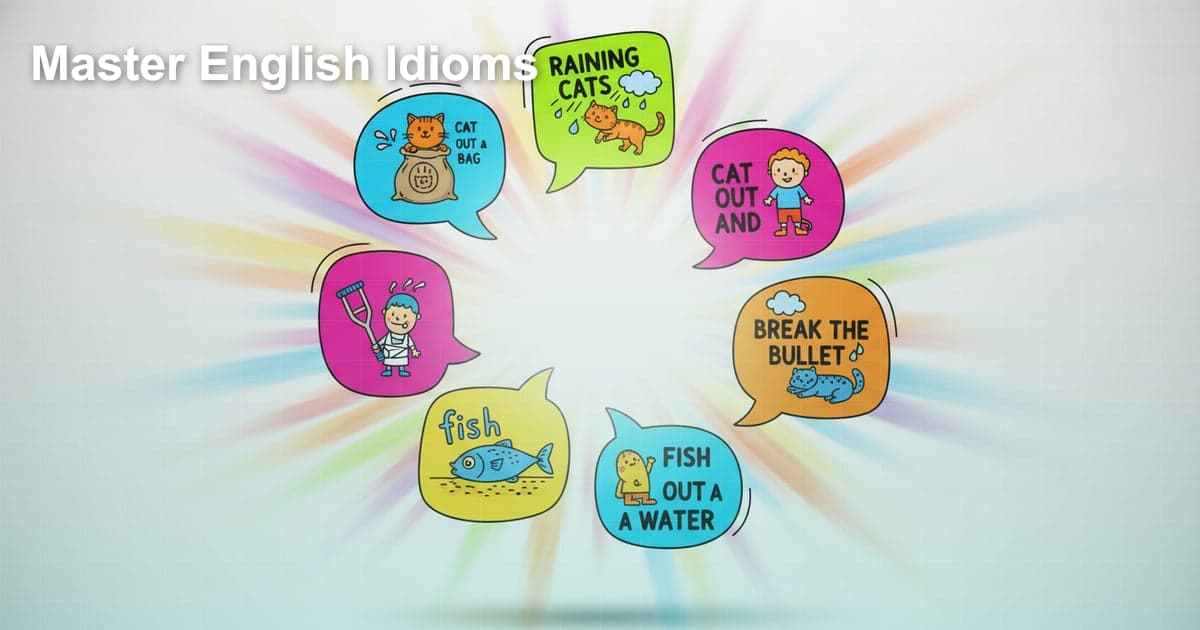
Hey there, language lovers! Ever feel like your romantic conversations in English are missing that certain… *spark*? You know, the kind of natural, colorful language that makes you sound like a native speaker? Well, you've come to the right place! Today, we're diving headfirst into the wonderful world of English idioms about love and relationships. Forget those stiff textbook phrases; we're talking about the real deal, the expressions that add flavor and depth to how you talk about your significant other, your crushes, or even just those complicated feelings.
As a language teacher with years of experience helping students navigate the nuances of English, I’ve seen firsthand how mastering idioms can transform a learner’s confidence. It’s not just about knowing the words; it’s about understanding the *feeling* behind them. Think of it like this: learning vocabulary is like collecting ingredients, but idioms are the secret spices that turn a plain dish into a gourmet meal. So, buckle up, because we’re about to spice up your English!
Why Idioms Matter in Love and Relationships
You might be asking, "Why focus on idioms specifically for love? Isn't regular vocabulary enough?" Great question! The truth is, when we talk about something as personal and emotional as love, our language often becomes more figurative and nuanced. Using idioms shows a deeper cultural understanding and makes your communication more engaging and authentic. For learners aiming for higher proficiency levels, like B2 (Upper Intermediate) or C1 (Advanced) on the CEFR scale, or preparing for exams like IELTS or Cambridge English, understanding and using these expressions is crucial.
For instance, imagine a student, Sarah, who was preparing for her IELTS Speaking test. She could describe her boyfriend’s kindness using basic adjectives, but her answers felt a bit flat. After we worked on idioms, she was able to say, "He’s always been my rock, supporting me through thick and thin." This single idiom painted a much richer picture of their relationship, showcasing her vocabulary range and her ability to convey complex emotions effectively. Her examiner noted her improved fluency and natural expression, contributing to a higher band score.
Common Pitfalls to Avoid
Before we jump into the fun stuff, let's talk about a common mistake. Many learners try to translate idioms literally. For example, if you hear "head over heels," and you translate it word-for-word into your native language, it might sound utterly bizarre! The key is to learn the idiom as a complete unit and understand its figurative meaning. Another trap is overusing idioms; just like too much spice can ruin a dish, too many idioms can make your speech sound unnatural or forced. Aim for quality, not quantity.
Top Love & Relationship Idioms You Need to Know
Alright, let's get to the heart of it! Here are some of the most common and useful idioms related to love and relationships, broken down for easy understanding.
1. Falling in Love
This is the starting point for many romantic stories. It describes the process of developing romantic feelings for someone.
- Idiom: Fall head over heels (in love)
- Meaning: To fall deeply and completely in love with someone, often suddenly.
- Example: "From the moment they met at the coffee shop, he was completely head over heels for her."
- Origin/Context: The image is of someone literally falling, losing their balance because they are so overcome with emotion. It suggests a loss of control and a powerful, overwhelming feeling.
- Learner Tip: Use this when you want to express a strong, almost sudden romantic infatuation. It’s more intense than just "liking" someone.
Case Study: Mark, a student from Germany, struggled to express the intensity of his feelings for his new girlfriend. He used phrases like "I like her a lot" or "I feel good with her." After learning "fall head over heels," he practiced using it in sentences about his own experience. In his next conversation class, he shared, "I think I’ve fallen head over heels for Anna. Everything about her just makes me happy!" His classmates immediately understood the depth of his feelings, and his teacher praised his natural use of the idiom.
- Idiom: Be smitten (with someone)
- Meaning: To be very charmed by or infatuated with someone.
- Example: "She’s totally smitten with the new guy in her class; she can’t stop talking about him."
- Origin/Context: "Smitten" comes from the verb "to smite," which historically meant to strike or hit. Here, it implies being struck by Cupid's arrow, overwhelmed by attraction.
- Learner Tip: This idiom suggests a strong, often immediate attraction, similar to "head over heels" but perhaps slightly less dramatic. It's great for describing a crush or early stages of romantic interest.
2. Being in a Relationship
Once love blossoms, people enter into relationships. These idioms describe the state of being together romantically.
- Idiom: Tie the knot
- Meaning: To get married.
- Example: "After dating for five years, they finally decided to tie the knot next summer."
- Origin/Context: This likely refers to ancient marriage ceremonies where the couple's hands were literally tied together with a cord or ribbon.
- Learner Tip: This is a very common and informal way to talk about marriage. You wouldn't typically use it in a formal wedding invitation, but it's perfect for casual conversation.
Before/After Scenario: Before learning "tie the knot," a learner might say, "They are going to get married soon." After learning the idiom, they can say, "They're planning to tie the knot next year!" This sounds much more natural and less like a direct translation.
- Idiom: Pop the question
- Meaning: To propose marriage.
- Example: "He’s been planning it for months; he’s finally going to pop the question on their anniversary."
- Origin/Context: "Popping" suggests something sudden and perhaps a bit dramatic, like a surprise. The "question" is, "Will you marry me?"
- Learner Tip: This is the standard, informal way to refer to a marriage proposal.
- Idiom: Be on the same page
- Meaning: To have the same understanding or agree about something. In relationships, it means partners share similar views on important matters like future plans, finances, or the relationship's direction.
- Example: "It's important for couples to be on the same page about their long-term goals."
- Origin/Context: Imagine reading a book together; if you're on the same page, you're following the same part of the story.
- Learner Tip: This idiom is incredibly useful not just in romantic relationships but in any collaborative situation. It highlights the need for mutual understanding and agreement.
3. Relationship Challenges & Dynamics
No relationship is perfect. These idioms help describe the ups and downs.
- Idiom: Have chemistry (with someone)
- Meaning: To have a strong, natural attraction or connection with someone, making interaction easy and exciting.
- Example: "You can just tell they have chemistry; they’re always laughing together."
- Origin/Context: Borrowed from science, "chemistry" here refers to a positive, almost magical interaction between two people.
- Learner Tip: This is often used for initial attraction but can also describe a lasting connection. It's less about deep love and more about that initial spark and enjoyable interaction.
Real-world Example: I remember a student, Maria, who was describing her friendship with a guy. She said, "We get along okay, but there's nothing special." We discussed "chemistry," and she realized that while they were friends, they didn't have that *spark*. Later, she met someone new and exclaimed, "Wow, we really have chemistry! It's so easy to talk to him!" This accurately conveyed the difference in her connections.
- Idiom: See eye to eye
- Meaning: To agree with someone. It's the opposite of "not seeing eye to eye."
- Example: "They often argue because they don't see eye to eye on parenting styles."
- Origin/Context: Literally, if you're looking at someone directly in the eyes, you are facing them and likely in agreement or at least acknowledging each other's presence equally.
- Learner Tip: This is a very common idiom for disagreement. You can say "We don't see eye to eye on this issue" to express a difference of opinion.
- Idiom: Be the apple of someone's eye
- Meaning: To be cherished or adored by someone above all others.
- Example: "His granddaughter is the apple of his eye; he dotes on her constantly."
- Origin/Context: The pupil of the eye was once thought to be a solid, precious object, hence its importance and value.
- Learner Tip: This idiom is often used for parents towards children, or grandparents towards grandchildren, expressing deep affection and pride.
4. Breaking Up & Moving On
Relationships aren't always forever. These idioms deal with the end of a relationship.
- Idiom: Break up with someone
- Meaning: To end a romantic relationship.
- Example: "She had to break up with him because they wanted different things in life."
- Origin/Context: Simply means to separate or divide.
- Learner Tip: This is the most straightforward and common way to say you ended a relationship.
- Idiom: Have the heart to do something
- Meaning: To have the courage or emotional strength to do something, especially something difficult or unkind. Often used in the negative.
- Example: "It was a difficult decision, and I didn't have the heart to tell him the truth immediately."
- Origin/Context: Relates to the heart as the center of emotions. If you lack heart, you lack the emotional capacity for the action.
- Learner Tip: This is useful for describing situations where you hesitate to do something because it might hurt someone's feelings.
Practical Teaching Tip: When teaching break-up idioms, I often encourage students to role-play scenarios. For example, one student might have to "break up with" another, using phrases like "I don't think I can have the heart to continue this relationship" or "We just don't see eye to eye anymore." This practice helps them internalize the language and feel more confident using it in real situations. We also discuss how to express sadness or regret, perhaps saying, "It breaks my heart that it didn't work out."
Putting It All Together: Practice Makes Perfect!
So, how do you start using these idioms confidently? It’s all about practice, practice, practice! Here are a few actionable steps:
- Keep a Notebook: Write down the idioms, their meanings, and example sentences. Try to create your *own* sentences using them.
- Use Them in Context: The next time you're talking about relationships (with friends, in a language exchange, or even in your writing), consciously try to weave in one or two idioms you've learned. Don't worry about perfection; just try!
- Listen Actively: Pay attention to how native speakers use these idioms in movies, TV shows, songs, and conversations. Notice the context and the emotion conveyed.
- Role-Play: Practice with a friend or language partner. Create scenarios: a first date, a proposal, a gentle breakup.
Exercise: Fill in the Blanks!
Try to complete these sentences with the most appropriate idiom from our list:
- When he saw her across the crowded room, he knew he was _______.
- They've been dating for years, and everyone expects them to ______ soon.
- It’s crucial that couples _______ about their future plans for the relationship to succeed.
- She was so _______ with the lead singer of the band; she bought all his albums.
- Despite their differences, they managed to _______ on the important decision of where to live.
(Answers: 1. head over heels, 2. tie the knot, 3. be on the same page, 4. smitten, 5. see eye to eye)
Mastering English idioms about love is a journey, and it takes time. But with consistent effort and a willingness to experiment, you'll find your conversations becoming richer, more expressive, and, dare I say, more romantic! Don't be afraid to try them out. Even if you make a mistake, it's a learning opportunity. Remember, the goal is clear and confident communication. Happy idiom hunting!